
Korean-Inspired Ground Beef Bowls (35g of Protein)
This post may contain affiliate links. If you click and purchase, we may earn a small commission. Read our full disclosure.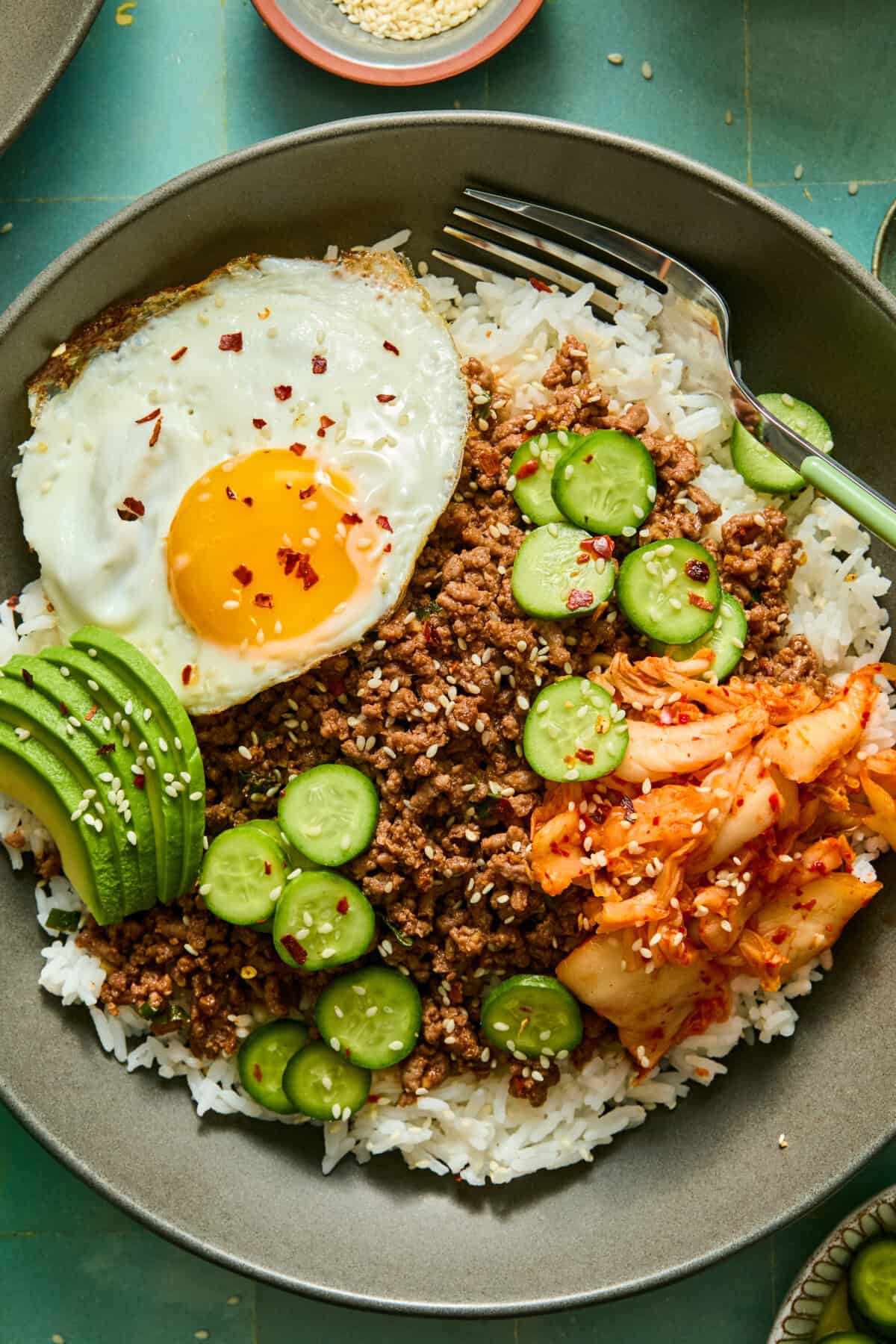
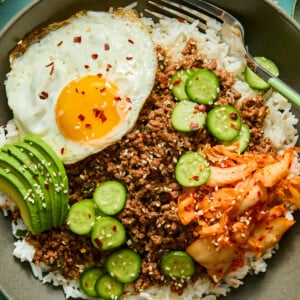
Think bulgogi but lightened up with ground beef and turned into the most delicious meal-preppable bowls. My girlfriends love this recipe so much they request it on Mom’s Night regularly. Real bulgogi is thin-sliced ribeye or sirloin that sits in a marinade for hours. Ground beef will never be that, but ground beef picks up the same sweet-savory-spicy profile in about a tenth of the time.
The sauce is the GOAT. Soy sauce, brown sugar, sesame oil, and gochujang go in after the beef is browned, and then you leave it alone for 3 to 4 more minutes. You’re waiting for the liquid to stop pooling at the bottom of the pan and start clinging to the meat. That’s where the magic happens.
If you like this style of fast weeknight beef, Ground Beef and Broccoli and Ground Beef Stir Fry are the same vibe.
Why you’ll love this recipe
- 35g of protein per bowl.
- Quick and easy.
- You’ll make the quick pickled cucumbers on repeat!
Ingredients and Substitutions:
These are the main ingredients and substitutions for these beef bowls. See the recipe card below for the full ingredient list and instructions.
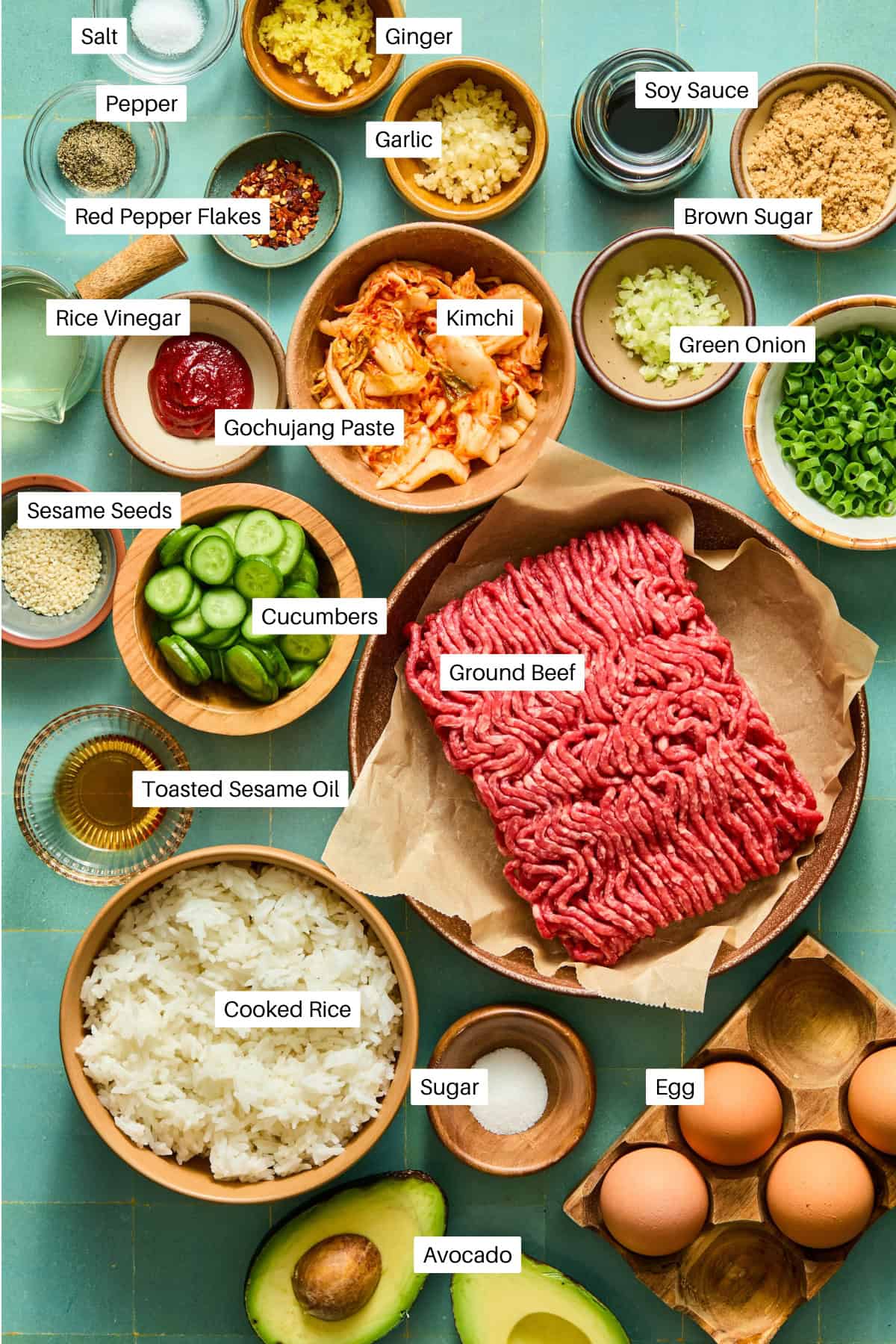
- Lean Ground Beef (93/7). Enough fat to brown in a dry pan, not so much that grease thins your sauce. Leaner (96/4, 99/1) needs a teaspoon of oil to start. Ground turkey or chicken will also need oil, they render almost no fat.
- Gochujang Paste. The one people buy wrong. Paste is thick and comes in a tub, and it’s what goes into the beef. Sauce is thin and squeezable, made for drizzling on top. Not interchangeable. Start with 1 Tbsp., you can’t take it back out.
- Low-Sodium Soy Sauce. Coconut aminos work but are sweeter, so drop the brown sugar to 1 Tbsp.
- Brown Sugar. This is what turns the sauce into a glaze instead of a puddle. Honey or maple syrup swap 1:1. Swerve sweetens but won’t glaze.
- Toasted Sesame Oil. A flavor ingredient, not a cooking fat. Vegetable oil is not a substitute.
- Fresh Garlic and Ginger. Both fresh for the best taste.
- Kimchi. Your acid and your crunch. Don’t skip it even if you think you’re not a kimchi person, it mellows way out against warm rice. You’ll find this in the refrigerated section, not the shelf-stable aisle.
- Cucumber and Rice Vinegar. Use unseasoned rice vinegar. Seasoned already has sugar and salt in it, which throws off the recipe. English, Persian or Cukes are great for this.
- Cooked Rice. Jasmine or short grain. Short grain holds up better under a runny yolk. 2 cups makes a 1/2 cup portion per bowl, check that number first if you’re adjusting macros.
- Eggs and Avocado. Technically optional, actually load-bearing. The egg adds 6g of protein and the yolk becomes part of the sauce. You can skip both to lower the calories.
Dietary Modifications
- Gluten-free: swap the soy sauce for tamari or coconut aminos, and read your gochujang label. Most major gochujang brands contain wheat, so this one is not gluten-free by default. Check your kimchi too.
- Dairy-free: naturally dairy-free as written, nothing to change.
Variations
- Add vegetables: shredded carrots or thinly sliced cabbage go in with the beef. Broccoli or snap peas go in during the last 3 minutes so they stay tender-crisp.
- Lower carb: swap in cauliflower rice, or do half jasmine and half cauliflower rice for volume.
- More heat: go up to 2 Tbsp of gochujang paste, or finish with the squeezable gochujang sauce and a spoonful of chili crisp.
- Meal prep version: skip the fried egg and avocado, pack the beef, rice, cucumbers, and kimchi separately, and add fresh toppings the day you eat it.
Expert Tip
→ Let the sauce reduce all the way. After the soy sauce, sugar, sesame oil, and gochujang go in, you want 3 to 4 minutes of stirring over medium-high heat. It’s ready when you drag your spatula through the middle of the pan and the track stays open for a second before liquid runs back in. If it fills instantly, keep going. Pull it early and you get seasoned beef sitting in a puddle, and that puddle turns your rice to mush. It also keeps thickening as it rests, so if it looks slightly glossier than you wanted, that’s correct.
Tips for the Best Beef Bowls
- Sauce is watery and pooling → Pulled off the heat too early, or the beef was too fatty and you didn’t drain it. Fix: give it 2 more minutes over medium-high, stirring, until it coats the beef.
- Way too spicy → Used 2 Tbsp of gochujang out of the gate, or your brand runs hot. Fix: more rice, more avocado, more pickled cucumber or even greek yogurt. Next time start at 1 Tbsp.
- Garlic tastes bitter → It went into the pan too early and cooked too long over high heat. Fix: add it at the 4 minute mark and give it 60 seconds, not 4 minutes.
- Beef is dry and crumbly → Overcooked, usually from browning past the point where it stops sizzling. Fix: get the sauce in as soon as the beef loses its pink, the reduction finishes the cooking.
Recipe FAQs
It’s a fermented Korean chili paste made from chili powder, glutinous rice, and soybeans. Salty, slightly sweet, deeply savory, and spicy in a slow way rather than a sharp way. You’ll find it in the international aisle of most grocery stores now, or refrigerated at any Asian market.
Paste is thick and concentrated and goes into the cooking. Sauce is thinner and sweeter and goes on top of the finished bowl. This recipe uses the paste. The sauce is an optional drizzle at the end, and both links are up in the ingredients section.
You can get close, but not the same. Use 1 Tbsp of sriracha plus 1 tsp of white miso for heat and fermented depth. You’ll miss the specific smoky sweetness, and that’s the whole point of the dish, so it’s worth buying the jar.
At 1 Tbsp of gochujang, mild to medium. Most people can eat it comfortably. At 2 Tbsp it’s assertive. Brands vary a lot in heat, so taste your paste before you commit.
Yes. Store the beef, rice, and pickled cucumbers in separate containers for up to 4 days. Reheat the beef and rice, then add cold cucumbers, kimchi, avocado, and a fresh egg. Don’t pre-slice the avocado and don’t fry the eggs ahead, a reheated fried egg is sad.
Yes, the beef mixture alone freezes well for up to 3 months. Cool completely, portion into freezer bags, and press flat so it thaws fast. Freeze the beef only, not the rice bowl assembled.
To log this in MyFitnessPal or Macros First, search: Ohsnapmacros – Korean-Inspired Ground Beef Bowls. For the most accurate tracking, weigh your cooked beef portion in grams rather than eyeballing a fourth of the pan.
Check out our other easy beef bowls
If you make this recipe, please leave a rating and/or comment! Tag me on Instagram @ohsnapmacros, I love hearing from you!
Korean Beef Bowls
MyFitnessPal & MacrosFirst App Users
You can find this recipe and many others on MyFitnessPal and MacrosFirst by searching: Ohsnapmacros – Korean Beef Bowls
Ingredients
For the Beef
- 1 lb. lean ground beef (93/7)
- 4 cloves garlic, minced
- 1 Tbsp. fresh ginger, grated
- 1/4 cup low-sodium soy sauce
- 2 Tbsp. brown sugar
- 1 Tbsp. toasted sesame oil
- 1-2 Tbsp. gochujang paste (start with 1)
- 1/2 tsp. black pepper
- 3 green onions, whites minced and greens sliced
For the Pickled Cucumber
- 1 whole cucumber (or 4 cukes), thinly sliced
- 3 Tbsp. rice vinegar
- 1 tsp. sugar
- 1/4 tsp. salt
- pinch of chili flakes, optional
For the Bowls
- 2 cups cooked rice, jasmine or short grain rice
- 1 cup kimchi, roughly chopped
- 4 whole fried sunny side up (strongly recommended) see notes for nutrition without
- 1 avocado, sliced
- sesame seeds, garnish
- Gochujang sauce (optional sweet & savory topping)
Instructions
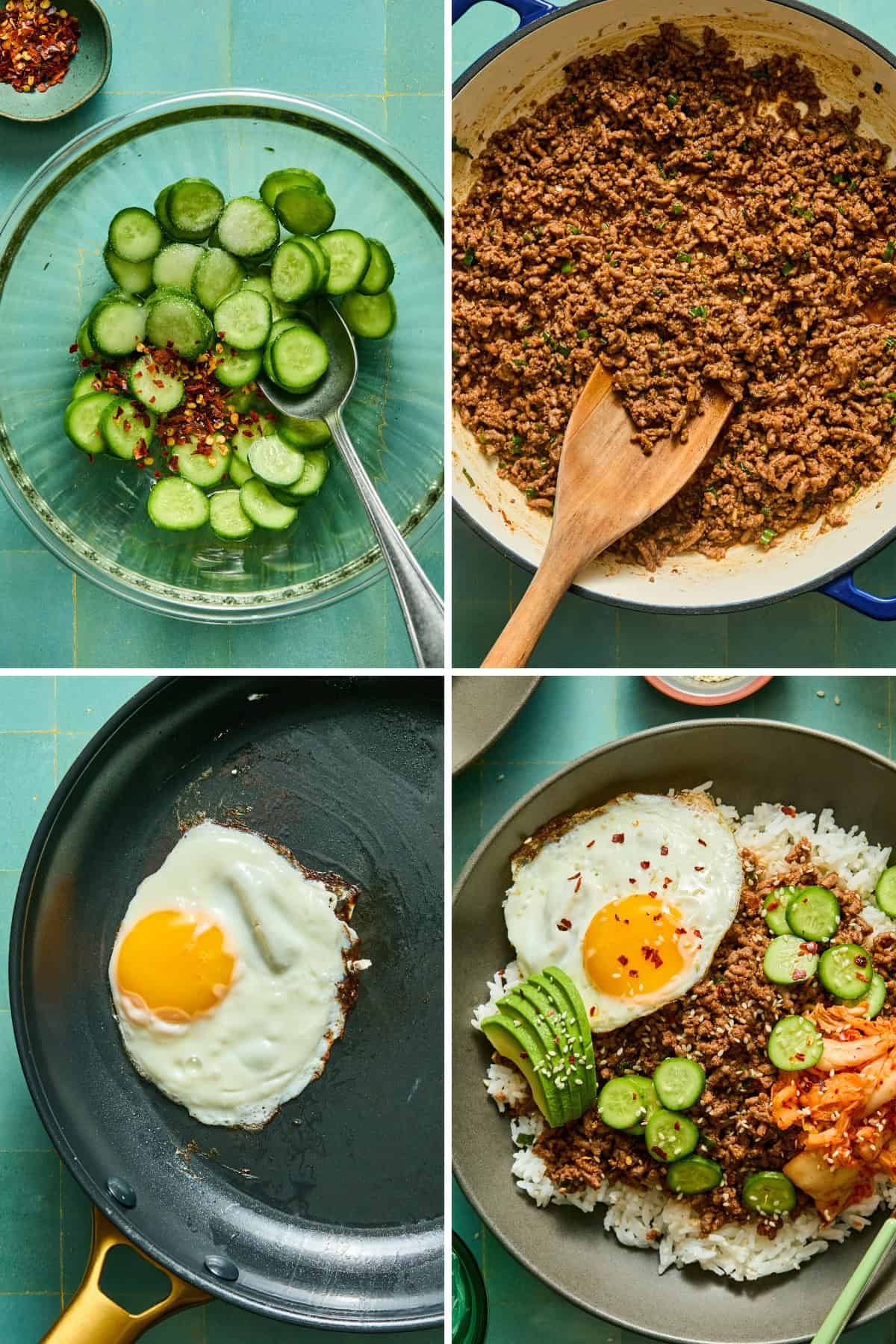
- Combine the sliced cucumber with rice vinegar, sugar, salt, and chili flakes if using. Toss and set aside to quick pickle while you cook everything else. Even 10 minutes makes a real difference.
- Heat a large skillet over medium high heat, no oil needed since the beef has enough fat to render on its own. Add the ground beef and the green onions. Break the beef up as it cooks.
- Once the beef is mostly browned, about 4 minutes in, add the garlic and ginger. Cook another minute until fragrant, don't let the garlic sit in there too long or it turns bitter.
- Stir in the soy sauce, brown sugar, sesame oil, gochujang, and black pepper. Cook for 3 to 4 more minutes, stirring often, until the liquid reduces and clings to the beef instead of pooling at the bottom of the pan. Don't rush it off the heat early. It will thicken as it sits.
- While the beef finishes, fry your eggs in a separate pan to your preferred doneness. A runny yolk that breaks into the bowl is the move here though.
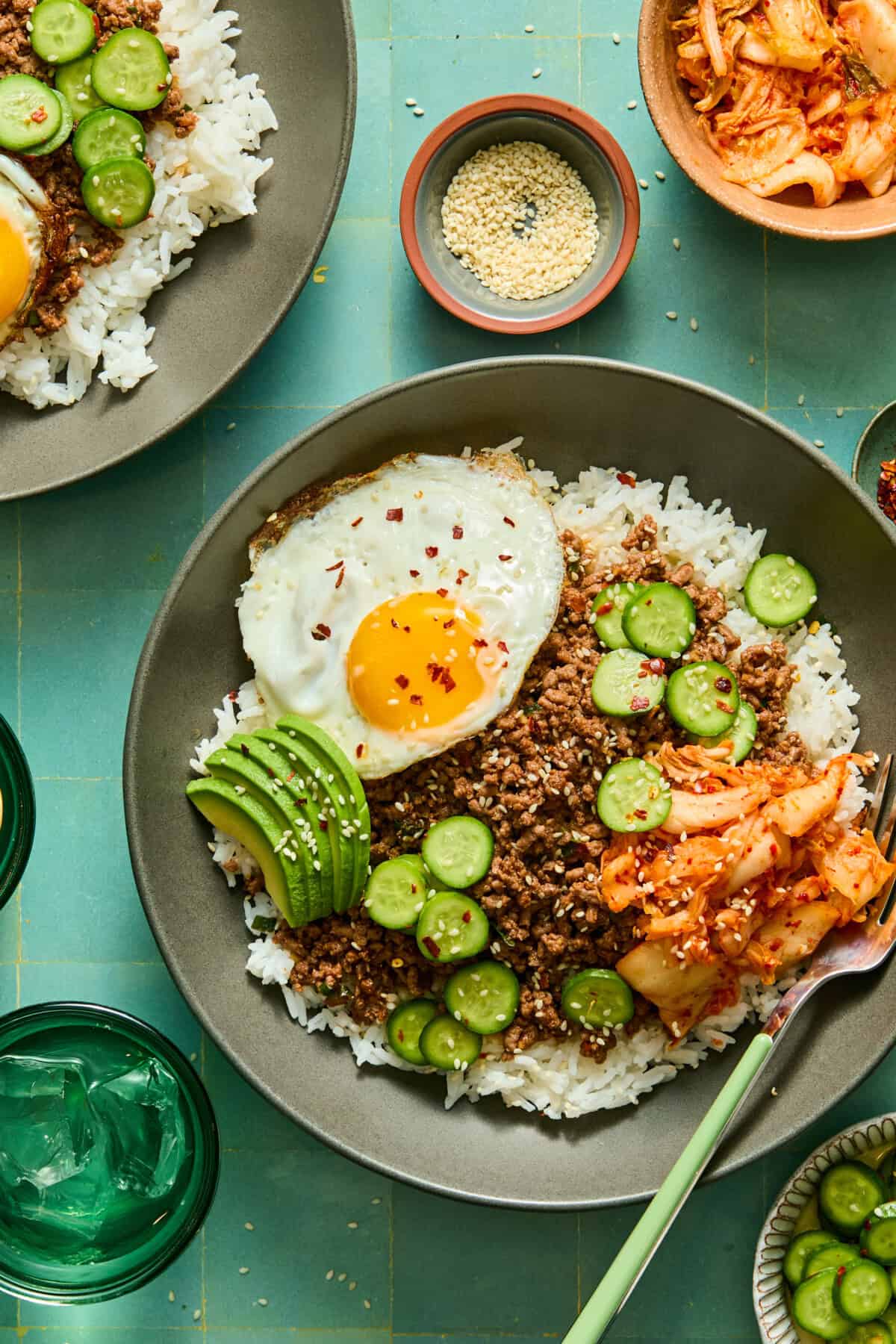
- Divide the rice between 4 bowls. Top with the beef (115g), 1/4 cup of kimchi, 14 of the quick pickled cucumbers, and 1/4 sliced avocado.
- Top each bowl with a fried egg and finish with and sesame seeds.
- Note: these are fantastic for meal prep. If meal prepping just add the kimchi and avocado when you're ready to enjoy. I even meal prep with my egg on top.
Notes
- Nutrition facts include rice, avocado and egg. To lower fat or carbs opt out of the egg and avocado and swap rice with cauli rice or a combo.
- Nutrition facts without rice, egg & avocado so you can build what works: 262 calories: 26 grams protein, 13 grams carbs, 11 grams fat
- Nutritional information is an estimate and will vary with substitutions.
- Gochujang paste and gochujang sauce are two different products. The paste (thick, in a tub) goes into the beef. The sauce (thin, squeezable) is an optional drizzle at the end.
- Start with 1 Tbsp of gochujang. Brands vary a lot in heat and you can always stir in more at the end.
- Let the sauce reduce fully. If liquid runs back into the track your spatula makes, keep cooking.
- Use unseasoned rice vinegar for the cucumbers. Seasoned already contains sugar and salt.
- Storage: beef, rice, and pickled cucumbers keep separately in the fridge for up to 4 days. The beef mixture freezes for up to 3 months.
